In this guide
- What should you do before you call a tow truck?
- Do you need a tow at all?
- How to call a tow truck: step by step
- What will a tow truck dispatcher ask you?
- How do you describe your location on Beaumont roads?
- What should you ask before you agree to a tow?
- Flatbed or wheel-lift: which does your car need?
- How can you tell a tow company is legitimate in Texas?
- Printable checklist: what to have ready when you call
- Frequently asked questions about calling a tow truck
- About Hawk Towing & Auto
To call a tow truck, pull as far off the road as you can, then tell the dispatcher where you are, what you’re driving, and what’s wrong. Have your location, vehicle details and a callback number ready. Before you say yes, ask for an ETA, how the car will be towed, and what forms of payment the company accepts.
Last updated: November 15, 2026
Never called one before? That’s normal. You’re stuck, you’re stressed, and nobody ever taught you what to say. This guide gives you a word-for-word call script, a cheat sheet for describing your spot on Beaumont roads, and a printable checklist. It works with any company you reach when you search for towing near me.
Need a tow now? Call Hawk Towing & Auto at (409) 790-1677.
What should you do before you call a tow truck?
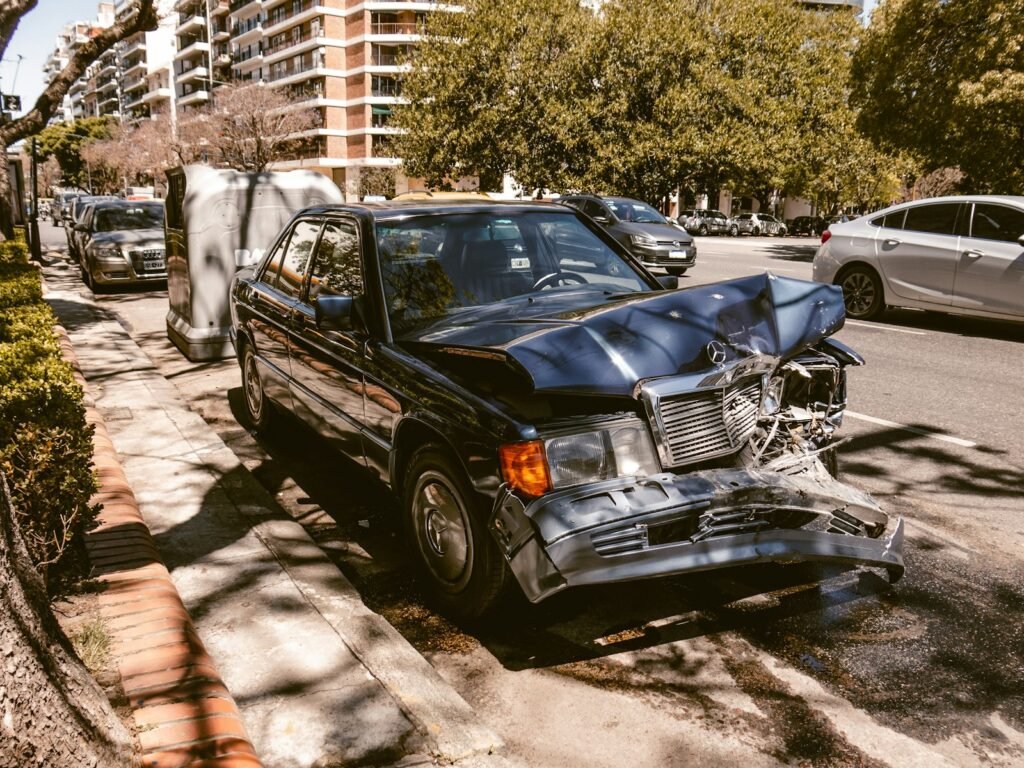
Get safe first. Park as far off the traveled part of the road as you can and turn on your flashers. If you need to leave the car, exit from the passenger side, away from traffic. The Texas Department of Public Safety lists these same steps in its travel tips.
Then make the call while your phone still has charge. Once you’re on the line, lower your screen brightness to save battery. Keep the phone on and ringer up, because the dispatcher may call you back. For a longer safety walk-through, read our Beaumont emergency towing guide.
Do you need a tow at all?
Not always. A dead battery, a flat tire and keys locked in the car are common roadside problems, and each one has its own fix. Tell the dispatcher what happened and ask whether it’s a tow or a roadside job. If the car still can’t move after that, you tow.
- Won’t start, clicks or dim lights: ask about a jump start service.
- Flat tire: ask about flat tire service before you assume a tow.
- Keys inside the car: ask about lockout service.
How to call a tow truck: step by step
To call a tow truck, make the scene safe, find your exact location, gather your vehicle details, and call a local towing company. Answer the dispatcher’s questions, ask for an ETA, the tow method and payment types, then wait somewhere safe with your phone on.
- Get safe. Flashers on, car off the travel lanes, passenger-side exit if you must get out.
- Pin down your location. Road, direction, last exit or cross street, one landmark.
- Gather vehicle details. Year, make, model, and drive type: front-wheel, rear-wheel, AWD, 4WD, lowered or electric.
- Pick a local company. Search for towing near me and choose one with a local address and a phone number you can call and talk to a person on.
- Give the details. Use the script below.
- Ask before you agree. ETA, tow method, total cost and payment types.
- Wait safely. Stay away from traffic. Keep your phone on in case the dispatcher calls back.
- Check the truck when it arrives. The company name and permit number should be on it. Take photos of your car, confirm the drop-off address, and ask for a receipt.
What will a tow truck dispatcher ask you?
A dispatcher will ask where you are, what vehicle you have, what’s wrong, where you want it towed, and a callback number. Expect questions about keys, drive type (AWD, 4WD, lowered), and who will be with the car. Clear answers help the right truck reach you the first time.
| Dispatcher asks | What to say | Why it matters |
|---|---|---|
| Where are you? | Road, direction, last exit or cross street, landmark | The truck goes to the right spot on the right side of the road |
| Year, make and model? | “A 2018 Honda CR-V” | Sets the truck size and how the car is hooked up |
| Drive type? | FWD, RWD, AWD, 4WD, lowered, hybrid or electric | Decides flatbed or wheel-lift |
| What’s wrong? | Won’t start, flat tire, crash damage, locked out, stuck in a ditch | Shows whether it’s a tow, a roadside fix, or a winch job |
| Will it roll? | Wheels turn, steering moves, or it’s stuck | A car that won’t roll needs different loading |
| Do you have the keys? | “Keys are with me” or “keys are locked inside” | Keys inside may mean a lockout first |
| Where should it go? | Shop address or your home address | Sets the route and the trip length |
| Who will be with the car? | You, someone else, or no one | The driver needs to know who hands over the keys |
| What number can we reach you at? | The phone you’ll keep on | The dispatcher can reach you if plans change |

Here is what that sounds like when you put it together:
Hi, I need a tow. I’m on US-69 northbound, on the right shoulder, just past the last exit I saw. It’s a 2018 Honda CR-V, all-wheel drive. It won’t start. I have the keys, and I’ll be with the car. I need it taken to a repair shop in Beaumont. I’ll keep this phone on. How long until a truck can get to me, and how will you tow it?
Not sure what’s wrong? Say that. “It stopped and won’t restart” is a complete answer.
How do you describe your location on Beaumont roads?
Give the road name, your direction of travel, the last exit or cross street you passed, and one landmark you can see. On a highway, add a mile marker or green exit sign if you can read one. Say it out loud even if you also share a map pin.
- Name the road and the direction. Say “I-10 eastbound,” “US-69 northbound” or “US-96 southbound,” not just “the freeway.” Several highways cross each other around Beaumont, and the direction tells the driver which side of a divided road you’re on.
- Add the last exit or the next cross street. On city streets, name the street you’re on and the one you just crossed, such as College Street or Calder Avenue.
- Use your phone. Open your maps app and read out the address or coordinates it shows for your blue dot.
- Say which way you were driving. Then say which shoulder you’re on: right, left or median.
- Mention what’s near you. A bridge, an overpass, a gas station or a big sign is easy for a driver to spot.
On the interstate, the details change a little. Our guide to a car breakdown on I-10 near Beaumont covers what to do and what to tell the dispatcher there.
Stuck in Jefferson, Hardin or Orange County? Call (409) 790-1677.
What should you ask before you agree to a tow?
Ask any towing company four things before you say yes: when the truck can reach you, how it will tow your car, what the total cost covers, and what forms of payment it accepts. Write down the answers and the company’s name. These questions work with any company.
- “What’s my ETA?” Arrival time depends on distance, traffic, weather and how many calls are in at once. Ask what could change it. A window with a reason is a better answer than a vague “soon.”
- “Will it go on a flatbed or a wheel-lift?” The next section explains the difference.
- “What’s the total, and what could change it?” Distance, winching and wait time are common factors. Ask whether the number you hear is for the whole trip.
- “What forms of payment do you accept?” Ask before the truck arrives, so you’re not searching for a card on the roadside.
- “Can you confirm the drop-off address?” Say it back to the dispatcher so you both have the same one.
Most passenger cars, SUVs and light pickups fall under light-duty towing. If you ride a bike, tell the dispatcher at the start. Motorcycle towing needs equipment made for bikes.
Flatbed or wheel-lift: which does your car need?
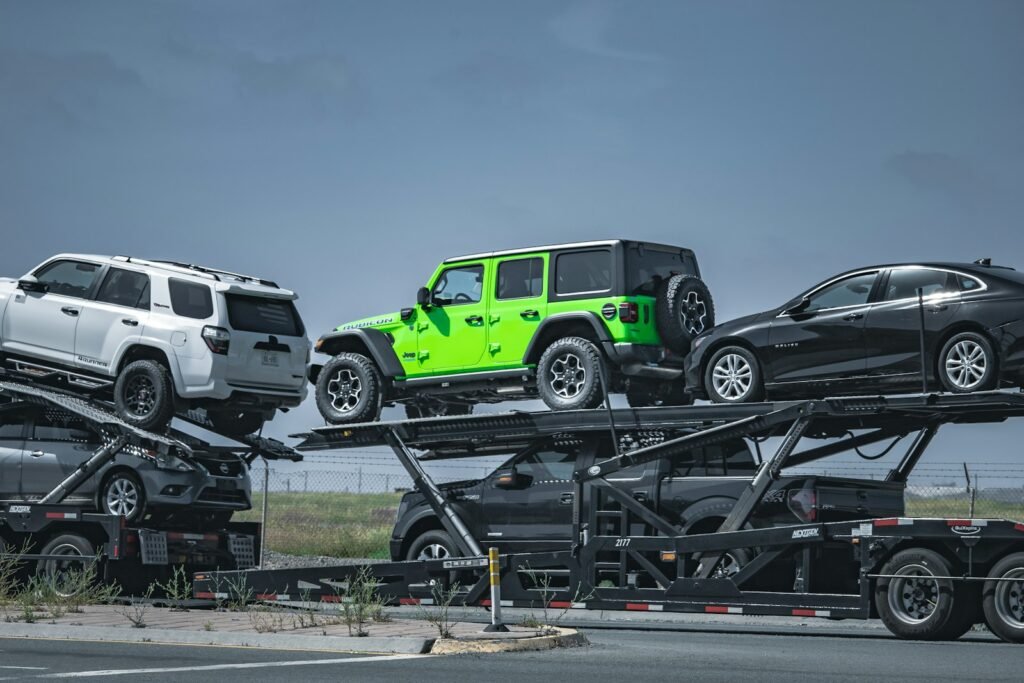
A flatbed carries your whole vehicle on a flat deck with all four wheels off the road. A wheel-lift raises two wheels while the other two roll. A flatbed is usually the safer pick for AWD, 4WD, lowered, electric and damaged vehicles. Ask which one the company will send.
| Your situation | Usual fit | Why |
|---|---|---|
| AWD or 4WD | Flatbed | All four wheels are tied to the drivetrain, so rolling two of them can strain it |
| Lowered or sports car | Flatbed | Low bumpers and skirts can scrape on a hook-up |
| Hybrid or electric | Flatbed | Many owner’s manuals say not to tow with the drive wheels on the ground |
| Crash damage, stuck in a ditch or mud | Flatbed, often with a winch | The winch pulls the car up onto the deck without rolling it |
| Front-wheel or rear-wheel drive that rolls fine | Wheel-lift can work | A short, simple tow with no damage may not need a flatbed |
Not sure? Check your owner’s manual or tell the dispatcher your drive type. You can read how loading works on our flatbed towing page.
How can you tell a tow company is legitimate in Texas?
Texas licenses tow truck drivers and permits tow trucks through the Texas Department of Licensing and Regulation (TDLR). A legitimate truck shows the company name, phone number, city and state, and permit number on its side. You can look up a license on the TDLR website.
- Drivers need a license. TDLR says all tow truck operators must hold one of three licenses: Incident Management, Private Property or Consent Tow.
- Each truck needs its own permit. TDLR requires the permit holder’s name, phone number, city and state, and the truck’s permit number to be displayed on the truck in letters at least 2 inches high.
- You can check. TDLR’s site has a “Verify a License” tool. Ask the dispatcher for the company’s legal name so you can search it.
- If something goes wrong, TDLR takes consumer complaints online.
If the truck that arrives has no company name or permit number on it, don’t hand over your keys until you’ve called the number you first dialed and confirmed who is on the way.
Ready to call? Hawk Towing & Auto takes towing calls around the clock. Dial (409) 790-1677.
Printable checklist: what to have ready when you call
Print this table or screenshot it. Fill it in on the roadside, then read it to the dispatcher top to bottom.
| Check | What to have or ask |
|---|---|
| ☐ | Hazard lights on, car off the travel lanes, passenger-side exit if you must leave the car |
| ☐ | Road, direction, last exit or cross street, landmark |
| ☐ | Year, make and model |
| ☐ | Drive type: FWD, RWD, AWD, 4WD, lowered, hybrid or electric |
| ☐ | The problem in one sentence |
| ☐ | Keys with you, or locked inside |
| ☐ | Drop-off address |
| ☐ | Who will be with the car, and your callback number |
| ☐ | Ask: ETA and what could change it |
| ☐ | Ask: flatbed or wheel-lift |
| ☐ | Ask: total cost and what it covers |
| ☐ | Ask: forms of payment accepted |
| ☐ | Write down: company name, driver name, truck permit number |
| ☐ | Photos of the car, a receipt, and the drop-off address confirmed |
Frequently asked questions about calling a tow truck
How long does it take a tow truck to get to you?
It depends on distance, traffic, weather and how many calls the company has at once. No honest dispatcher can promise one number for every call. Ask for an ETA when you call, and ask what could change it. If the wait runs long, call back and ask for an update.
Can you call a tow truck if you don’t know exactly where you are?
Yes. Open your maps app and read out the address or coordinates it shows for your location. Add the road, your direction, the last exit or cross street you passed, and any landmark you can see. A mile marker or green exit sign helps a dispatcher find you quickly.
Do you have to be with your car when the tow truck arrives?
Usually someone should be there to confirm the vehicle and hand over the keys. The dispatcher will ask who will be with the car, so answer honestly. If you can’t be there, say so at the start of the call and ask what the company needs from you.
Who do you call if you’re stranded and not sure who to contact?
Call a local towing company that answers the phone and lists a real address. The Texas Department of Public Safety also lists a Motorists Helpline at 1-800-525-5555 for drivers whose vehicle is disabled or who are stranded on the side of the road.
Should you take photos of your car before it’s towed?
Yes, if it’s safe to do so. Take a few photos of each side of your vehicle and the dashboard before the driver loads it. Photos give you a record of the car’s condition and mileage. Don’t stand in or near a traffic lane to get them.
What can you do if a tow in Texas goes wrong?
Write down the company name, the driver’s name and the truck’s permit number. Tow drivers and tow trucks in Texas are licensed and permitted through TDLR, and TDLR takes consumer complaints online at tdlr.texas.gov/complaints. Keep your receipt and photos to back up your complaint.
About Hawk Towing & Auto
Hawk Towing & Auto is a towing and roadside assistance company based in Beaumont, Texas. We tow cars, SUVs and motorcycles with light-duty, medium-duty and flatbed equipment. We also handle jump starts, flat tires and lockouts, and we buy junk cars. Our work covers Jefferson, Hardin and Orange Counties, and you can reach us 24 hours a day, 7 days a week.
Read more about Hawk Towing & Auto or see our full list of towing and roadside services.
Need a tow now? Call Hawk Towing & Auto at (409) 790-1677.
Hawk Towing & Auto is a locally owned towing and roadside assistance company in Beaumont, TX, open 24 hours a day, 7 days a week. Keep this checklist in your glove box, and call when you need a hand.
Hawk Towing & Auto · 3140 Blanchette St, Beaumont, TX 77701 · (409) 790-1677