In this guide
- What happens during a tow, step by step?
- What should you have ready before the truck arrives?
- What does a tow truck driver do when they arrive?
- Flatbed or wheel-lift: how will they hook up my car?
- Can I ride in the tow truck, and what can I leave in the car?
- Where does the car go: your home or a shop?
- What should you inspect and photograph before you sign?
- How do you stay safe while you wait for the truck?
- Frequently asked questions about towing my car
- About Hawk Towing & Auto
What happens during a tow: you call, a dispatcher takes your location and vehicle details, and a driver arrives and confirms your car. You sign the paperwork, the driver loads the car on a flatbed or hooks it to a wheel-lift, and then delivers it to your home or shop. This guide walks through each step so you know what to expect and what to check before you sign.
Last updated: November 16, 2026
Standing at the roadside, “who is towing my car, and where is it going?” is a fair question. A professional tow runs in a clear order. You can watch each step happen and speak up at the right moments.
Need a tow now? Call Hawk Towing & Auto at (409) 790-1677 and tell the dispatcher where you are.
What happens during a tow, step by step?
A professional tow follows the same basic path. You call and give details. A driver arrives and checks in. You confirm the car and sign. The driver hooks up or loads the vehicle, secures it, and drives to the drop-off. You check the car and sign off. The table shows each step and your part in it.
| Step | What happens | What you do |
|---|---|---|
| 1. Call and dispatch | A dispatcher asks for your location, vehicle, the problem, and where the car should go. Our first-time tow call script lists the exact details to have ready. | Give a clear location and call-back number. Ask the dispatcher for an ETA. |
| 2. Driver arrives and checks in | The driver looks over the scene and confirms who called. | Wait in a safe spot and say who you are. |
| 3. Vehicle and ID check | The driver matches the car to the call. A driver may ask to see ID or proof you can authorize the tow. | Show your photo ID and your registration or insurance card. |
| 4. Quick assessment | The driver checks drive type, ground clearance, tires, damage, and whether the car rolls and shifts. | Share what you know, such as “it won’t shift out of park.” |
| 5. Paperwork | You authorize the tow and confirm pickup and drop-off. | Read before you sign. Ask about payment methods. Ask for a copy. |
| 6. Hook-up | The driver loads the car on a flatbed or lifts two wheels with a wheel-lift. | Stay back from the truck and traffic. |
| 7. Securing | The driver fastens the car down and does a final check. | Take your valuables. Hand over the car key. |
| 8. Drop-off | The driver unloads the car at your home or shop. | Walk around the car, compare it to your photos, then sign. |
What should you have ready before the truck arrives?
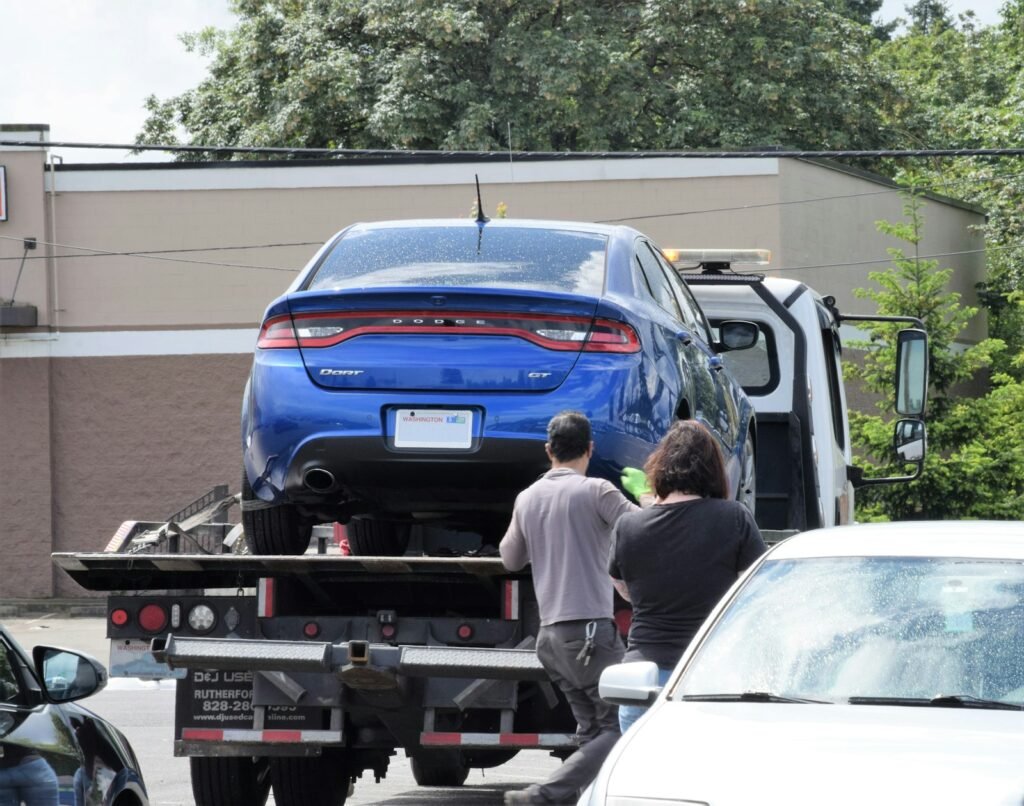
Have your photo ID, your vehicle registration or insurance card, your car key, the drop-off address, and a way to pay ready. Pack your valuables in a bag. Make sure your phone is charged and the dispatcher has your number. These items let the driver confirm you and your car quickly.
- Photo ID
- Registration or insurance card for the vehicle
- Car key or key fob (the driver may need it to release the steering lock and shift to neutral)
- Full drop-off address, plus the shop’s open hours if the car is going to a shop
- Your phone, charged, with the dispatcher’s number saved
- A card or other way to pay (ask the dispatcher which forms of payment are accepted)
- Roadside plan or insurance details, if you have them
- Your valuables, packed in one bag
What does a tow truck driver do when they arrive?
When the driver arrives, they check the scene, confirm who you are and which car they are there to tow, and look the vehicle over. Then they explain the plan, get your signature on the paperwork, and choose the hook-up method. A tow truck driver does all of this before the car moves.
- Check-in. The driver confirms the call details: your name, the car, and the drop-off. Say right away if anything has changed since you called.
- Vehicle and ID confirmation. The driver matches the make, model, and plate to the call. Showing ID and proof of ownership or authorization helps this go fast.
- Assessment. The driver checks whether the wheels turn, whether the steering is locked, how low the car sits, and whether it is front-, rear-, all-, or four-wheel drive. Tell the driver what you know.
- Paperwork and authorization. You approve the tow, usually on a work order or tow ticket with your name, the vehicle, and the pickup and drop-off locations. Read it, ask questions, and ask for a copy.
Most passenger cars, SUVs, and pickups are handled with a light-duty towing service. Larger work vans and box trucks may need medium-duty towing, so tell the dispatcher what you drive when you call.
Flatbed or wheel-lift: how will they hook up my car?
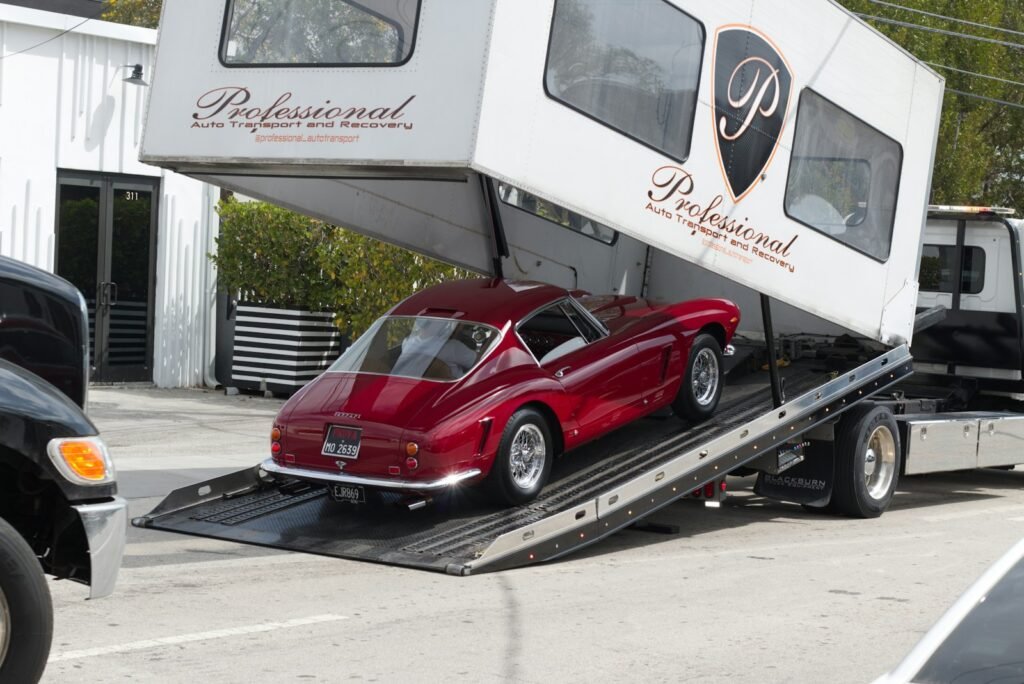
A flatbed carries your whole car on its bed, with all four wheels off the road. A wheel-lift raises two wheels and the other two roll. AWD, 4WD, lowered cars, and motorcycles usually need a flatbed. Many other cars can go either way, depending on the car and the driver’s call.
| Your vehicle | Usual method | Why |
|---|---|---|
| AWD or 4WD car, SUV, or truck | Flatbed | Power can reach all four wheels, so rolling two on the road can strain the drivetrain. |
| Lowered car | Flatbed | A low front end can scrape on a steep ramp or when lifted by the wheels. The driver can load it slowly and carefully. |
| Motorcycle | Flatbed | A bike has to stay upright and strapped down. See motorcycle towing for more. |
| Car that won’t roll, has locked wheels, or is damaged | Flatbed | The whole car rides on the bed, so the wheels never have to turn. |
| Electric or hybrid | Check your owner’s manual | Many makers call for a flatbed. Tell the dispatcher what you drive. |
| Many front- or rear-wheel drive cars that roll and steer normally | Wheel-lift or flatbed | Depends on the car, the damage, the tow distance, and the driver’s call. |
A flatbed towing service is the safer pick when you are unsure. Tell the dispatcher if you drive an AWD, 4WD, or lowered car, or if a wheel is locked, so the right truck shows up.
Need a tow now? Call Hawk Towing & Auto at (409) 790-1677. Say what you drive and where the car is stuck.
Can I ride in the tow truck, and what can I leave in the car?
Ask the dispatcher about riding along when you call, because cab seats are limited and company policy can vary. When a seat is open, riders sit in the truck cab. Take your valuables, ID, and phone with you, and leave nothing loose inside the car.
Tell the dispatcher how many people need a ride, including kids and pets. If the cab is full, plan a ride with a friend or a rideshare so you can meet the truck at the drop-off.
Take with you
- Wallet, phone, charger, and ID
- Medications and glasses
- House keys and any key you don’t need to give the driver
- Bags, laptops, and electronics
- Child car seats
- Registration and insurance papers
Loose items can shift while the car is loaded and moved. Take anything you would hate to lose.
Leave in the car
Secure items, like a spare tire in the trunk, can stay. Roll the windows up, lock the doors, turn off the engine and lights, and hand the driver the car key. If the keys are locked inside or lost, say so on your first call.
Where does the car go: your home or a shop?
You pick the drop-off when you call: your home, a repair shop, or another address the company serves. Give the full street address. For a shop, check that it is open and expecting the car. The driver unloads the car, and you look it over before you sign off.
- Home: Tell the dispatcher about steep driveways, low garage clearance, gates, and tight streets. The truck needs room to unload. A lowered car or one with a locked wheel needs extra room.
- Shop: Call the shop first. Ask who is receiving the car and what to do if the shop is closed. Some shops have an after-hours drop spot, but you have to ask.
To check whether your drop-off address is covered, ask the dispatcher when you call.
What should you inspect and photograph before you sign?
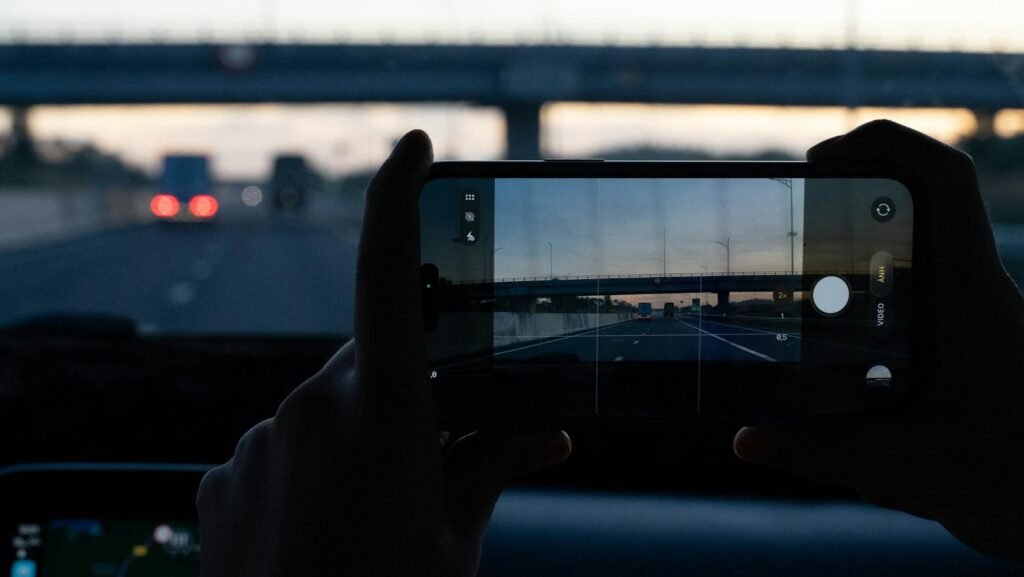
Before you sign, walk around the car with your phone and photograph every side, each corner, the wheels, the roof, the windshield, and the dashboard. At drop-off, repeat the walk-around. If you spot something new, say so before you sign and ask the driver to note it on the paperwork.
- At pickup, only if it is safe. If you are on a busy shoulder, skip the photos and stay clear of traffic. Photos already on your phone also help.
- Cover the whole car. Shoot all four sides, each corner, bumpers, wheels and rims, roof, glass, and the dash showing the odometer and any warning lights.
- Photograph the truck. Get the company name and truck number so you have a record of who towed the car.
- At drop-off, repeat it. Use the same angles in good light.
- Speak up before you sign. Point out any new damage to the driver and ask for it to be written on the paperwork.
- Keep your copy. Keep the paperwork, receipt, and photos in one place in case you need them later.
How do you stay safe while you wait for the truck?
Stay clear of moving traffic while you wait. Texas law tells drivers to move over or slow down for a stationary tow truck that is using its authorized equipment. If anyone is hurt, there is a fire, or you are in immediate danger, call 911 first. Follow the driver’s directions on where to stand.
Under Texas Transportation Code §545.157, a driver approaching a stationary tow truck using authorized equipment must do one of two things, unless a police officer directs otherwise. On a road with two or more lanes going the same way, they move out of the lane closest to the truck. Or they slow down to no more than 20 mph below the posted limit, or 5 mph where the limit is under 25.
Stuck on the interstate? Our guide to a car breakdown on I-10 in Beaumont covers what to do before the truck gets there. For more local advice, read the Beaumont emergency towing guide.
Frequently asked questions about towing my car
Do I need to be there when the tow truck arrives?
Usually, yes. The driver needs to confirm the car and get authorization to tow it. If you can’t be there, tell the dispatcher when you call. Ask who else can sign for you and what that person needs to show. Don’t assume a friend can authorize the tow.
Why does my AWD or 4WD car need a flatbed?
In AWD and 4WD vehicles, power can reach all four wheels. Rolling two wheels on the road while the other two are lifted can strain the drivetrain. Many owner’s manuals call for a flatbed, which carries the whole car. Check your manual and tell the dispatcher your drive type.
What should I take out of my car before a tow?
Take your wallet, phone, ID, medications, house keys, bags, electronics, and anything valuable. Loose items can shift during loading. Keep your registration and insurance papers with you. Leave only items that are secure, like a spare tire in the trunk, and hand the driver the car key.
Can I choose where my car goes?
Yes. When you call, you give the drop-off address: your home, a repair shop, or another place the company serves. Check that a shop is open and expecting the car before you go. Confirm the address with the driver at pickup so there’s no mix-up.
What if I find new damage after the tow?
Tell the driver before you sign anything. Take clear photos, ask the driver to note the damage on the paperwork, and get a copy. Then contact the towing company and your insurance company, and send your photos. Compare them with the photos you took at pickup or older ones on your phone.
Does the driver need my car key?
Often, yes. A key lets the driver release the steering lock, shift into neutral, and load the car safely. If your keys are locked inside, lost, or the car won’t leave park, tell the dispatcher on the first call. That tells the driver how to plan the load.
Need a tow now? Call Hawk Towing & Auto at (409) 790-1677.
Now you know what happens during a tow, from the first call to the final signature. Hawk Towing & Auto is a locally owned towing and roadside assistance company in Beaumont, TX, serving Jefferson, Hardin and Orange Counties. When you call, tell the dispatcher what you drive and where you are, and ask any question you have along the way.
About Hawk Towing & Auto
Hawk Towing & Auto is a towing and roadside assistance company based in Beaumont, Texas. We tow cars, SUVs and motorcycles with light-duty, medium-duty and flatbed equipment. We also handle jump starts, flat tires and lockouts, and we buy junk cars. Our work covers Jefferson, Hardin and Orange Counties, and you can reach us 24 hours a day, 7 days a week.
Read more about Hawk Towing & Auto or see our full list of towing and roadside services.
Hawk Towing & Auto · 3140 Blanchette St, Beaumont, TX 77701 · (409) 790-1677