In this guide
- What to Do When Your Car Breaks Down on a Texas Highway: The 5-Minute Plan
- Should You Stay in the Car or Get Out?
- Who Should You Call First After a Breakdown?
- What Should You Do Before Help Arrives?
- Breakdown Steps on the Highway When the Tow Truck Arrives
- First Steps When Your Car Broke Down: Quick Recap
- Frequently Asked Questions
- Broke Down Near Beaumont? Call Our Local Crew
- About Hawk Towing & Auto
When your car breaks down on a Texas highway, get as far off the traveled lanes as you can, turn on your hazard lights, and decide fast whether it’s safer to stay in the car or get out on the side away from traffic. Then call 911 for any danger, or call a tow company for a car that just won’t go.
This page turns that into a minute-by-minute plan, plus a checklist of what to gather and what not to do before help arrives.
Last updated: November 20, 2026
We’re the crew at Hawk Towing & Auto, a locally owned towing and roadside assistance company in Beaumont, TX. We pick up stalled cars on I-10, US-69 and US-96 across Jefferson, Hardin and Orange Counties. The drivers who handle the shoulder well aren’t always the ones who know cars. They’re the ones who know what to do first. Here’s that order.
If you’re broken down on I-10 right now, our I-10 breakdown guide for Beaumont covers that stretch of road. If it’s dark out, read our tips for being stranded on a Texas highway at night.
Already safe and need a tow? Call Hawk Towing & Auto at (409) 790-1677. A real dispatcher picks up, 24/7.
What to Do When Your Car Breaks Down on a Texas Highway: The 5-Minute Plan
A car breakdown action plan works when it’s short and in order. Safety comes before the phone call, and the phone call comes before anything else. Each step below takes about a minute. If a step doesn’t apply, skip to the next one.
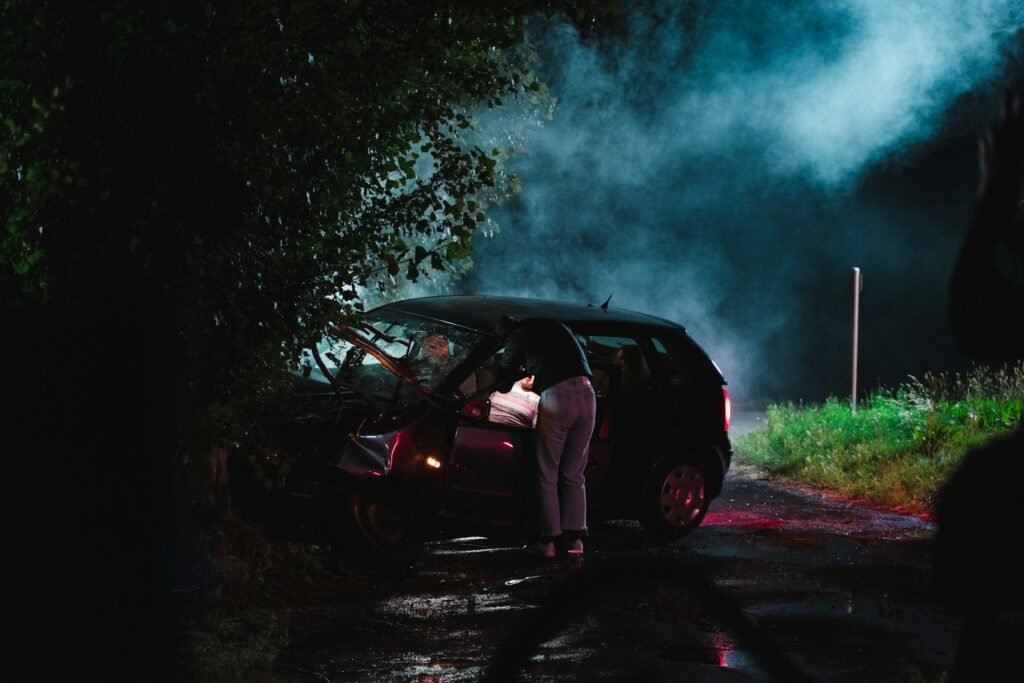
- Minute 0 to 1: Get out of the lanes. The moment the car feels wrong (a shake, a warning light, power loss), signal and ease toward the shoulder. Don’t slam the brakes. Texas DPS says to park as far off the traveled portion of the highway as possible. If the car still moves, keep rolling to the safest spot you can reach. A wide shoulder is good. An exit ramp, side street or parking lot is better.
- Minute 1 to 2: Hazards on, position checked. Turn on your flashers right away. That’s the first visibility step DPS lists. Then look around. Are all four tires past the white line? Are you on a curve or just over a hill where drivers can’t see you? Is the car in a travel lane? Your answers decide the next minute.
- Minute 2 to 3: Decide stay or exit. Use the table in the next section. In short: if you’re fully off the road and nothing is burning, staying with the car is usually the safer choice. If the car is in a lane, smoking or smells of fuel, get out on the side away from traffic and move away from it.
- Minute 3 to 4: Make the right call. Danger means 911. A car that simply won’t go means a tow company or the state’s stranded motorist line. Give your exact location first, then the details listed below.
- Minute 4 to 5: Get ready while you wait. Gather your keys, registration, insurance card, ID and phone charger. Keep the doors locked. Put a “Send Help” note in the window if you can. Then stay put and watch for help.
Should You Stay in the Car or Get Out?
If your car is fully off the road and there’s no smoke, fire or fuel smell, stay with it and keep the doors locked. Texas DPS advises staying with the vehicle until uniformed law enforcement arrives, especially at night or in bad weather. If staying is unsafe, exit on the passenger side, away from traffic.
The hard part is knowing which side of that line you’re on. Here’s how we’d sort it.
| What you see | Safer choice | Why |
|---|---|---|
| Car fully on a wide shoulder, ramp or lot | Stay with the car, doors locked | DPS advises staying with the vehicle when possible |
| Car stopped in a travel lane and won’t move | Call 911, then exit away from traffic if you can do it safely | A stopped car in a lane can be hit |
| Smoke, flames or a fuel smell | Get out now, away from traffic, then call 911 | Fire risk outweighs traffic risk |
| Car stalled in rising or deep water | Leave it and move to higher ground if you can do so safely | That’s TxDOT’s guidance for stalls in deep water |
| Someone stops and offers help | Stay inside, doors locked, window cracked | DPS: ask them to call law enforcement for you |
If you do get out, DPS says to exit from the passenger’s side, away from traffic. Don’t stand between your car and the lanes, and don’t stand behind the car. Once you’re out, move away from the car and the road.
Southeast Texas has its own twist: water. TxDOT’s Texas Road Tips Handbook says that if your vehicle stalls in deep water, leave it and move to higher ground if you can do so safely. A car can be replaced. Call 911 once you’re out of the water.
Who Should You Call First After a Breakdown?
Call 911 first if anyone is hurt, the car is smoking or burning, or it’s stuck where it could be hit. For non-emergency help, Texas runs a Stranded Motorist Hotline at *DPS (*377) on a cell phone or 1-800-525-5555. If you just need the car moved, call a tow company directly.
| Situation | Who to call |
|---|---|
| Injury, fire, smoke, car in a live lane, anyone threatening you | 911 |
| Stranded, no danger, not sure who to call | *DPS (*377) or 1-800-525-5555, the Stranded Motorist Hotline |
| Car won’t start, has a flat, or won’t move, and you’re safe | A towing and roadside company |
| You plan to walk away from the car | Law enforcement, to tell them where and why you left it |
TxDOT’s handbook lists the Stranded Motorist Hotline for “non-emergency roadside assistance” and says a live operator answers 24 hours a day. It lists 911 for life-threatening situations, including roadside emergencies.
What to tell the tow dispatcher
The smoothest calls we take sound the same. The driver gives a location we can find, a clear picture of the car and the problem, and a working callback number. Expect questions like these, and have the answers ready before you dial. Our step-by-step guide on how to call a tow truck goes deeper.
- Road and direction. “I-10 eastbound,” not just “I-10.” On a divided highway, the wrong direction can mean a long loop to reach you.
- Nearest exit or cross street. Read the last green exit sign you passed, or a business sign you can see.
- Which side you’re on. Right shoulder, left shoulder, median, ramp or lot.
- A map pin. Open your phone’s map, drop a pin and text it if the dispatcher asks. It removes the guesswork.
- The car. Year, make, model and color. Say if it’s all-wheel drive, 4×4, lowered or a motorcycle, since that can change which truck comes.
- The problem. Won’t start, flat tire, locked out, overheated or won’t move at all. Say if it’s stuck in a lane.
- Where it’s going. Your home, a shop, or “I don’t know yet.”
- People with you. How many need a ride, if any. Ask the dispatcher whether riding along is possible.
Ready with those details? Call our Beaumont dispatcher at (409) 790-1677. You’ll get a straight answer about what happens next and an ETA when you call.
What Should You Do Before Help Arrives?
Before help arrives, stay where you decided was safe, keep the doors locked, and gather what the tow driver will need: keys, registration, insurance card, ID and a charged phone. Check what you can from inside the car. Don’t try repairs near traffic, and don’t accept rides from strangers.
Check without leaving the car
- Which warning lights are on (battery, temperature, oil, check engine). Snap a photo of the dash.
- Whether the car cranks, clicks or is silent when you turn the key. That helps tell a dead battery from a bigger problem.
- Your phone’s battery level. Plug it in now if the car’s power still works, or switch on low-power mode.
- Your exact spot on the map, so you can repeat it if the call drops.
Your before-help-arrives checklist
| Gather | Why it matters |
|---|---|
| Car keys (and fob) | Lets the driver release the steering lock, shift into neutral and load the car with less risk of damage |
| Registration | Shows the car is yours if you’re asked |
| Insurance card | Needed if roadside coverage or a claim comes into it |
| Driver’s license or ID | Confirms who’s releasing the car |
| Phone and charger | So the dispatcher or driver can reach you |
| Medicine, wallet, child seats, garage opener | Things you won’t want to leave in a car headed to a shop |
| Water and something to keep you comfortable | Southeast Texas heat and cold snaps both make a wait harder |
If you’re well off the road and it’s safe to step out, DPS also suggests raising the hood and tying a light-colored cloth to the antenna or door handle. A “Send Help” sign in a window works from inside the car. If you’re not sure it’s safe, skip the hood. The flashers and your phone call do most of the work.
What not to do while you wait
- Don’t fix it in the danger zone. Changing a tire on the traffic side or leaning over the engine near the lane isn’t worth it. Our flat tire service and jump start service exist so you don’t have to.
- Don’t stand behind or beside the car on the traffic side.
- Don’t open the door to strangers. DPS says to keep the doors locked, crack a window and ask them to call law enforcement.
- Don’t walk the highway unless staying is more dangerous. If you must walk, DPS says to write down your name, the date, the time you left, the direction you’re going, and the plate number, a description of any vehicle you get into and the name and description of the person you’re riding with. Then tell law enforcement where you left your car and why.
- Don’t drive through water to get to safety. Turn around if you can.
Breakdown Steps on the Highway When the Tow Truck Arrives
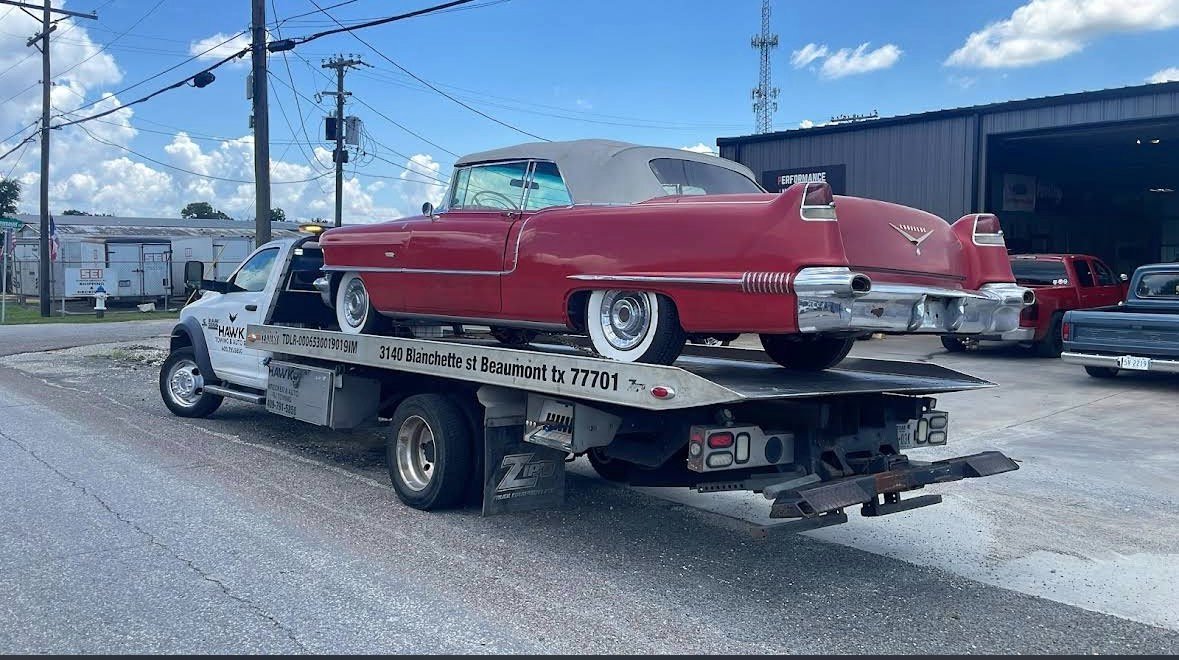
When the truck pulls up, stay where you are until the driver waves you over or comes to you. The driver will look at the car, confirm where it’s going and choose how to load it. A car with all-wheel drive or low ground clearance usually rides on a flatbed tow truck, with all four wheels off the road. Many other cars can go on a wheel-lift. Here’s a fuller look at what happens during a tow truck pickup.
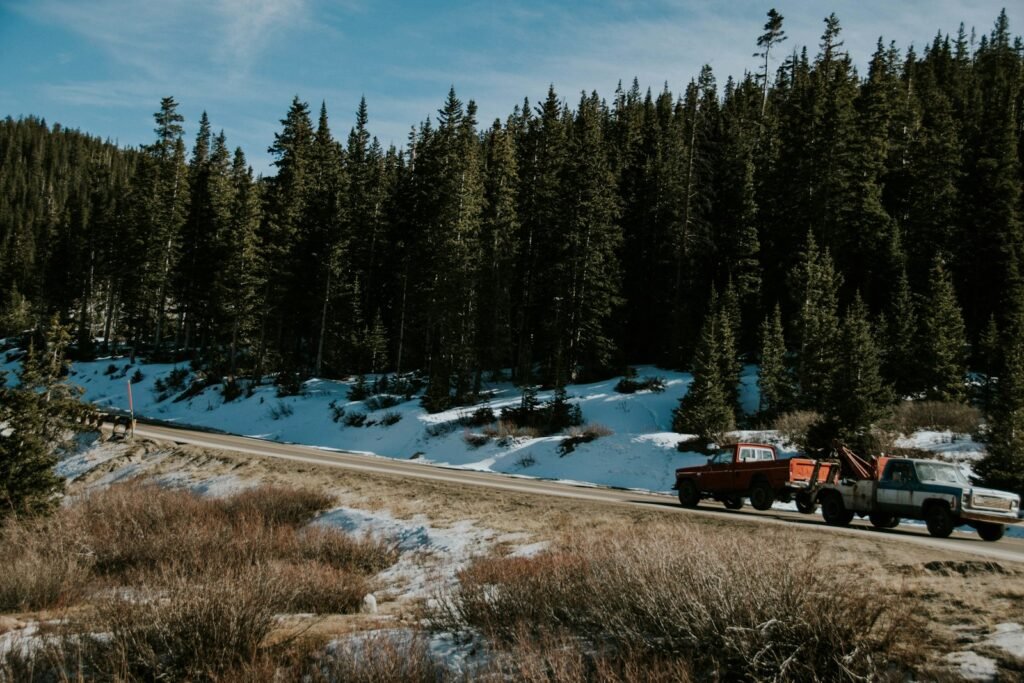
The law is on the tow truck’s side too. TxDOT explains that Texas’s Move Over or Slow Down law covers tow trucks with activated lights on the side of the road. Drivers must move over a full lane or slow to 20 mph below the posted limit. Still, don’t count on every driver doing it. Stay off the traffic side the whole time.
If your breakdown came with a crash, the steps change. Read accident towing vs. breakdown towing in Texas for that. For more roadside tips across the Golden Triangle, see our Beaumont emergency towing guide.
First Steps When Your Car Broke Down: Quick Recap
- Get as far off the traveled lanes as you can.
- Hazards on.
- Stay with the car if it’s safe. Exit on the side away from traffic if it isn’t.
- Call 911 for danger, *DPS (*377) for non-emergency state help, or a tow company if you’re safe.
- Give road, direction, exit, side and car details.
- Gather keys, registration, insurance card, ID and charger.
- Doors locked. No roadside repairs. No rides from strangers.
Frequently Asked Questions
Can I fix my car myself on the highway shoulder?
Small fixes are tempting, but a shoulder puts you close to fast traffic. If the problem is a flat on the traffic side, a dead battery or anything that has you bending over the engine near the lane, stay in a safe spot and call for help. A short wait beats working inches from passing trucks.
What should I do if someone stops to help me?
Texas DPS advises keeping your doors locked and cracking the window a little. Thank the person and ask them to call law enforcement for you. You don’t have to open the door or accept a ride. If you have already called a tow company, tell the person help is on the way.
Do I need my keys for the tow truck to take my car?
Usually, yes. Keys let the driver release the steering lock, shift into neutral and roll the car onto a flatbed or into position for a wheel-lift. Without them, loading is harder and the car is more likely to get scuffed. If your keys are locked inside, say so when you call.
Broke Down Near Beaumont? Call Our Local Crew
Once you’re safe, the rest is our job. Our local dispatcher answers around the clock and will tell you straight what happens next. Call Hawk Towing & Auto now at (409) 790-1677.
About Hawk Towing & Auto
Hawk Towing & Auto is a towing and roadside assistance company based in Beaumont, Texas. We tow cars, SUVs and motorcycles with light-duty, medium-duty and flatbed equipment. We also handle jump starts, flat tires and lockouts, and we buy junk cars. Our work covers Jefferson, Hardin and Orange Counties, and you can reach us 24 hours a day, 7 days a week.
Read more about Hawk Towing & Auto or see our full list of towing and roadside services.
Hawk Towing & Auto
3140 Blanchette St, Beaumont, TX 77701
(409) 790-1677
Open 24 hours, 7 days a week