In this guide
- The first five minutes: your night breakdown checklist
- Stranded on a highway at night in Texas: stay in the car or get out?
- How do you make your car easy to see in the dark?
- Who should you call: 911, *DPS, or a tow truck?
- How do you give your location in the dark?
- What if a stranger stops to help at night?
- How do you save your phone and car battery while you wait?
- Southeast Texas at night: fog, rain, and high water
- Texas Move Over law: does it protect your stalled car?
- What to keep in a night breakdown kit
- What happens when you call a night tow truck?
- Frequently asked questions
- About Hawk Towing & Auto
If you’re stranded on a highway at night in Texas, get as far off the road as you can, turn on your hazard lights, and stay in your locked car if it’s safe there. Call 911 for any danger or injury. For a plain breakdown, call the Texas DPS stranded motorist line or a 24/7 tow truck.
Last updated: November 18, 2026
At Hawk Towing & Auto, a locally owned towing and roadside assistance company in Beaumont, TX, we take calls 24/7. Night calls feel different. It’s dark, traffic looks faster, and you can’t see much past your own headlights. This is the plan we’d want our own loved ones to follow. It’s built on guidance from Texas DPS and TxDOT, and it comes down to four things: be seen, stay put, lock up, and call.
The first five minutes: your night breakdown checklist
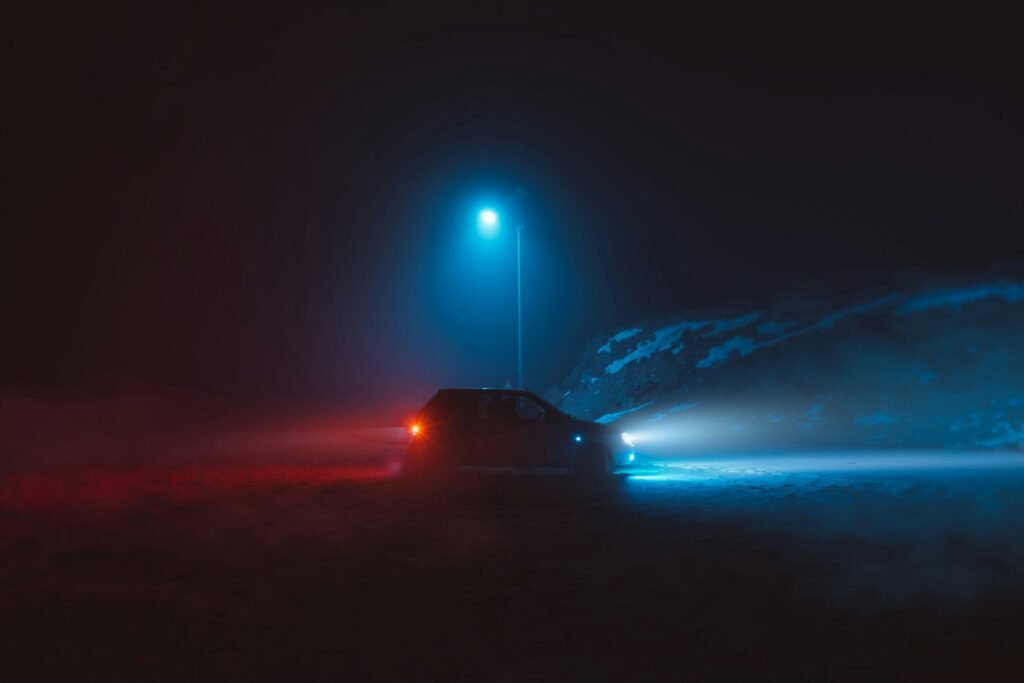
If your car broke down at night on a Texas road, do these in order. Don’t skip ahead to fixing the car.
- Get off the road. Texas DPS says to park as far off the traveled part of the highway as possible.
- Turn on your flashers. DPS puts it plainly: make your vehicle visible.
- Raise the hood, only if you can do it without stepping toward traffic. DPS says to open the hood and leave it open. At night, that tells passing drivers and troopers your car is stuck, not parked.
- Decide: stay in or get out. Most nights, staying in the locked car is the plan. The next section shows when it isn’t.
- Lock your doors. Keep them locked until help you trust is standing there.
- Call the right number. 911 for danger. A tow company or the DPS helpline for a breakdown.
This is a night-specific version of the steps in our Beaumont emergency towing guide, which covers breakdowns at any hour.
Stranded on a highway at night in Texas: stay in the car or get out?
Texas DPS says to stay with your vehicle, if possible, until uniformed law enforcement arrives, especially at night or in bad weather. If you do need to get out, exit from the passenger side, away from traffic. Staying in the car keeps you locked in, out of the rain, and easy to find.
Here’s how that plays out in real situations:
| What’s going on | What to do | Source |
|---|---|---|
| Car is off the road, no smoke, no water rising | Stay inside, doors locked, flashers on, hood up | Texas DPS |
| Car is stuck in a travel lane and won’t move | Call 911 now. If you can’t get the car off the road, get everyone out on the side away from traffic and off the road. | TxDOT |
| Smoke, fire, or someone is hurt | Call 911. If you leave the car, use the side away from traffic. | TxDOT, Texas DPS |
| Water is rising around the car | Leave it and get to higher ground if you can do it safely | TxDOT |
| You must get out for any reason | Exit from the passenger side, away from traffic | Texas DPS |
Sources: Texas DPS travel tips and the TxDOT Texas Road Tips handbook.
How do you make your car easy to see in the dark?
Turn on your hazard flashers, raise the hood, and tie a light-colored cloth to the antenna or a door handle. Those are the visibility steps Texas DPS lists for stranded drivers. DPS also suggests a “Send Help” sign in a window, so other drivers know you need help and aren’t just pulled over.
A few night notes from our side of the call:
- Light colors show up. A white towel or T-shirt is easy to spot in headlights. Keep one in the car.
- Write the sign before you need it. A folded sheet with “SEND HELP” in big marker letters lives fine in a glove box.
- Triangles are a bonus, not a must. Only set reflective triangles out if you can do it without walking toward traffic. If you can’t, leave them in the trunk. The flashers and hood come first.
Stuck right now? Call Hawk Towing & Auto at (409) 790-1677. We answer at night.
Who should you call: 911, *DPS, or a tow truck?
Call 911 for anything life-threatening, like an injury, fire, a crash, or a car stuck in a live lane. For a non-emergency breakdown, Texas has a stranded motorist line at *DPS (*377) from a cell phone, or 1-800-525-5555. TxDOT says a live operator answers it 24 hours a day. Then call a tow company that works nights.
| Your situation | Who to call |
|---|---|
| Someone is hurt, the car is smoking or on fire, or you were in a crash | 911 |
| Your car is stuck in a travel lane | 911 |
| A driver or vehicle near you seems dangerous | 911 |
| You’re safely off the road and need a non-emergency hand | *DPS (*377) or 1-800-525-5555 |
| You’re safely off the road and need the car moved | A 24/7 towing company |
You can call more than one. A common night pattern is 911 or *DPS first for safety, then the tow call. If you’re not sure what to say on that second call, our guide on how to call a tow truck gives you the exact details to have ready.
How do you give your location in the dark?
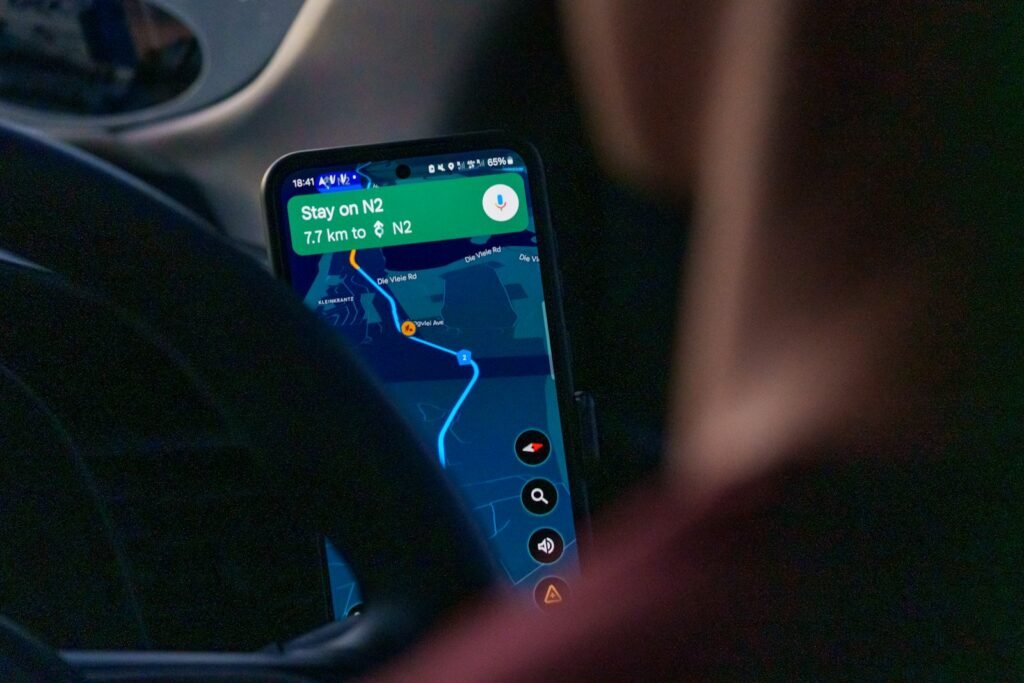
Give your road, your direction of travel, the last exit or cross street you passed, and the nearest mile marker if you can see one. TxDOT says to be ready to give your phone number and location when you call 911. A map pin from your phone helps a tow dispatcher find you too.
At night, landmarks vanish. These tricks still work:
- Open your map app first. The dot shows your road and direction. Many apps let you drop and share a pin.
- Look for a mile marker or exit sign. Your headlights may light one up.
- Think back to the last sign. The last exit number or green sign you passed narrows it down fast.
- Say which side you’re on. Right shoulder, left shoulder, median, or ramp.
- Describe the car. Color, make, and “flashers on, hood up” make you easy to pick out.
Here’s a short script you can read off your screen:
“I’m on I-10 heading east. The last exit I passed was a minute or two back. I’m on the right shoulder in a gray sedan with my flashers on and the hood up. This phone is my callback number.”
If you’re on the interstate itself, our step-by-step post on a car breakdown on I-10 in Beaumont covers the interstate details.
What if a stranger stops to help at night?
Keep your doors locked and crack the window just enough to talk. Texas DPS says that if someone stops to help, you should ask them to call law enforcement for you. You don’t need to open the door, step out, or explain more than that. Thank them and stay put.
If you decide you must leave the car with someone or on foot, DPS says to record your name, the date, the time you left, your direction of travel, and details about the vehicle and person you’re riding with. It also says to let law enforcement know where you left your car and why. Text those details to someone you trust, too.
How do you save your phone and car battery while you wait?
Keep your hazard lights on, because being seen matters most. Turn off what you don’t need, like the radio, interior lights, and fans. Put your phone in low-power mode, dim the screen, and close apps. Make your important calls first, then save the rest of the charge for callbacks.
| Keep on | Turn off or limit |
|---|---|
| Hazard flashers | Radio and screens you aren’t using |
| Phone ringer, so you hear callbacks | Interior and dome lights once you’re settled |
| Phone location, for your map pin | Streaming, video, and games |
| A charging cable, if the car still has power | Fans and seat heaters when the engine is off |
Hazard lights pull power from the battery, and a weak battery can run down over a long wait. If it dies, that doesn’t change the plan. Stay in, stay locked, and let a crew bring a jump start service or a tow.
Southeast Texas at night: fog, rain, and high water
Night is harder here for a few reasons, and each one points back to staying off the road and staying visible.
- Fog and rain. TxDOT tells drivers to adjust speed and add following distance in rain and fog. That also means a driver coming up behind you may see your car later than you’d like. Flashers on, hood up, stay inside.
- High water. TxDOT’s rule is “Turn Around, Don’t Drown.” As little as 6 inches of water can float some vehicles. Don’t drive around barriers at a low-water crossing, and never walk through swift water.
- Industrial traffic. Our area’s plants and industrial corridors mean trucks and work traffic can be on the road at any hour. Don’t assume a quiet road stays quiet.
- Dark stretches. Outside town, some roads have fewer lights and longer gaps between exits. Your location details matter more there.
- Late-night fatigue. TxDOT advises avoiding driving between midnight and 6 a.m. If you’re tired and waiting, stay behind locked doors rather than stepping out to stretch on the shoulder.
Texas Move Over law: does it protect your stalled car?
Not directly. The Texas Move Over or Slow Down law covers vehicles like police, emergency responders, tow trucks, and TxDOT vehicles with their lights on. A regular car with hazard flashers isn’t on that list. So don’t count on drivers moving over for you. Once a tow truck arrives with lights on, the law applies.
Under Texas Transportation Code §545.157, drivers approaching a covered vehicle must leave the lane closest to it on a road with two or more lanes their way, or slow to 20 mph below the posted limit. On roads posted under 25 mph, the slow-down speed is 5 mph.
TxDOT’s Move Over or Slow Down page lists law enforcement, tow trucks, utility vehicles, municipal waste trucks, emergency responders, and TxDOT vehicles. Since September 1, 2025, it also covers animal control officers and parking enforcement employees. TxDOT says a first offense can bring a fine of up to $1,250.
What that means for you: until a covered vehicle with lights is parked behind you, traffic has no special legal duty to give your car room. That’s one more reason the plan is to stay inside, off the road, and visible.
What to keep in a night breakdown kit
A small bag in the trunk turns a scary night into a long wait. Check it twice a year.
- Flashlight or headlamp, plus spare batteries
- Phone charging cable and a charged power bank
- White or light-colored cloth for the antenna or door handle
- A pre-written “SEND HELP” sign
- Pen and paper for notes, plates, and the details DPS says to record
- Rain poncho and a light blanket
- Water and a few snacks
- Reflective triangles, used only if you can place them without walking toward traffic
- Jumper cables or a charged jump pack
- Small first-aid kit
- A card with 911, *DPS (*377), 1-800-525-5555, and your tow company’s number, in case your phone dies
What happens when you call a night tow truck?
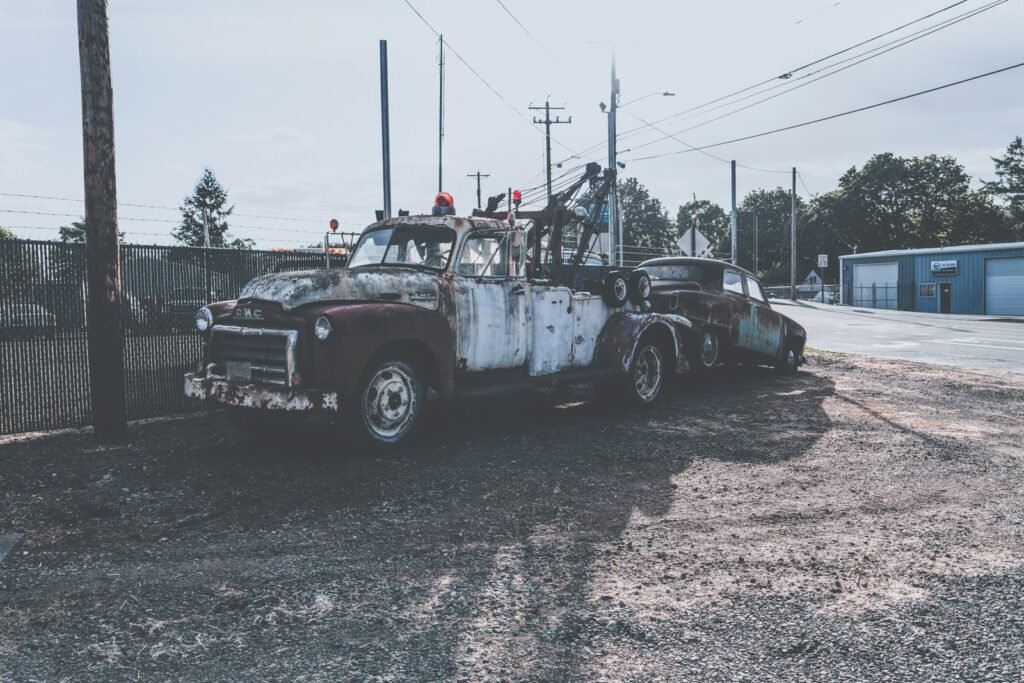
Expect questions about where you are, what you drive, what went wrong, and if you’re safe. A good dispatcher asks these first. You’ll get an ETA when you call, so you know what to expect. Then stay in your locked car until the truck is parked behind you with its lights on.
From there, the fix depends on the problem and the spot:
- Car won’t run. Most cars and pickups go on light-duty towing to a shop or home.
- Flat tire. If there’s safe room to work, a crew can handle flat tire service. If the shoulder is too tight, a tow to a safer spot makes more sense than working next to traffic in the dark.
- Dead battery. A jump may get you going right there.
Want to know what the hookup looks like? Read what happens during a tow truck pickup. Curious why wait times change at night? Our post on how long a tow truck takes to arrive in Beaumont explains the factors. We cover towns across Jefferson, Hardin and Orange Counties.
Need a night tow truck? Call Hawk Towing & Auto at (409) 790-1677 and tell us where you are.
Frequently asked questions
Can I get a tow truck at 2 a.m. in Beaumont?
Yes. Hawk Towing & Auto offers 24/7 towing across Jefferson, Hardin and Orange Counties, so you can call in the middle of the night. Tell the dispatcher where you are, what you drive, and what happened. You’ll get an ETA when you call. If anyone is hurt or in danger, call 911 first.
Should I walk to the next exit for help at night?
Texas DPS says to stay with your vehicle, if possible, until uniformed law enforcement arrives, especially at night or in bad weather. If you truly must walk, DPS says to write down your name, the date, the time you left, and your direction, then let law enforcement know where you left your car.
Will my hazard lights drain my car battery?
Hazard lights do draw power from the battery, and a weak battery can run down while you wait. Keep them on anyway, because being seen matters most. Turn off the radio, interior lights, and fans to save power. If the battery dies, a jump start or a tow can get you moving again.
What if a tow truck I didn’t call shows up?
Stay in your locked car and talk through a cracked window. Ask the driver which company sent them and who made the call. If it doesn’t match the company you called, don’t hand over your keys. Call your tow company back to check, or ask the driver to contact law enforcement.
Being stranded on a dark highway is scary, but the plan is short. Get off the road, get seen, stay locked in, and call. When you’re ready for the tow, our dispatcher will take it from there.
About Hawk Towing & Auto
Hawk Towing & Auto is a towing and roadside assistance company based in Beaumont, Texas. We tow cars, SUVs and motorcycles with light-duty, medium-duty and flatbed equipment. We also handle jump starts, flat tires and lockouts, and we buy junk cars. Our work covers Jefferson, Hardin and Orange Counties, and you can reach us 24 hours a day, 7 days a week.
Read more about Hawk Towing & Auto or see our full list of towing and roadside services.
Hawk Towing & Auto
3140 Blanchette St, Beaumont, TX 77701
(409) 790-1677